 What Is a Domain Name? Explained Simply for Beginners
 Imagine a giant city filled with buildings.
Every building has a numeric street address, but people usually do not remember places that way.
Instead, they remember the shop name on the sign outside.
You are much more likely to remember “Rainbow Bakery” than “Building 42, Street 18, Block 7.”
That is the easiest way to start understanding a domain name.
A domain name is the human-friendly name used to identify a website, instead of making people remember its numeric IP address.
Main Analogy
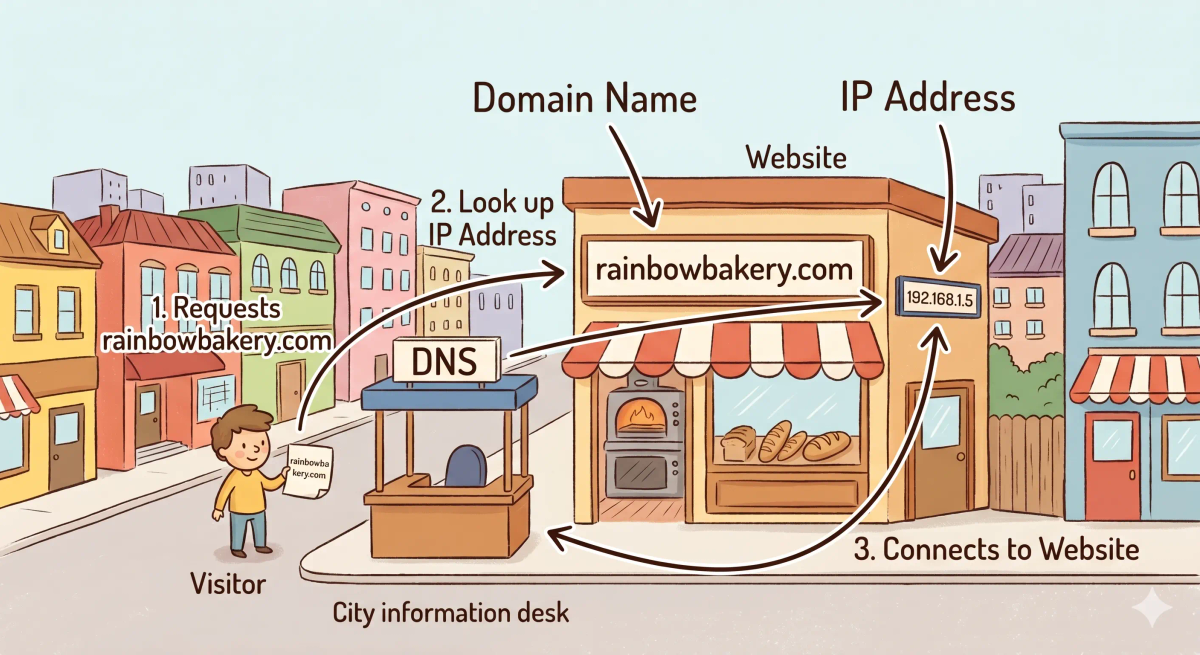
Think of a domain name like the shop name on a building in a giant city
- Website = the shop or building
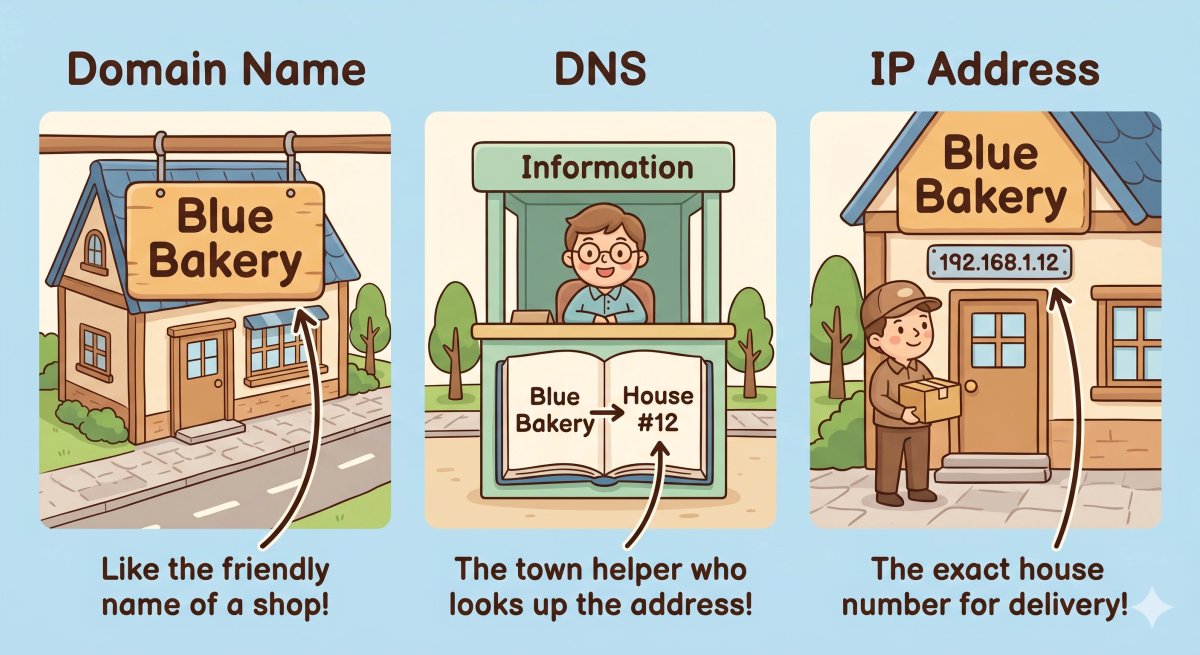
- Domain name = the easy name on the sign outside
- IP address = the actual numeric street address behind the scenes
- DNS = the city information desk that matches the shop name to the real address
- URL = the full delivery label or directions to a specific room or page inside
So the easiest way to understand a domain name is to think of it as the memorable name people use to find a place without having to remember the numbers.
What Problem Does It Solve?
If every website could only be found by a long number, people would have to memorize many confusing numeric addresses.
That would make the web far harder to use.
In the real world, computers can work with numeric IP addresses, but humans usually prefer names.
So the job of a domain name is to give people a simple, memorable way to refer to a website.
How It Works in the Story
- A building has a real numeric street address.
- The building also has a friendly shop name on a sign.
- Visitors remember the shop name instead of the number.
- When they want to go there, they ask for the shop name.
- The city helper can match that name to the correct building.
How It Works in the Real World
- A website has a numeric IP address.
- The site owner gives it a human-friendly domain name.
- A person types that domain name into a browser.
- DNS helps match the domain name to the correct IP address.
- The browser can then reach the website.
👉 That means a domain name helps people find websites using names instead of hard-to-remember numbers.
Real-World Example
Example: Visiting a website
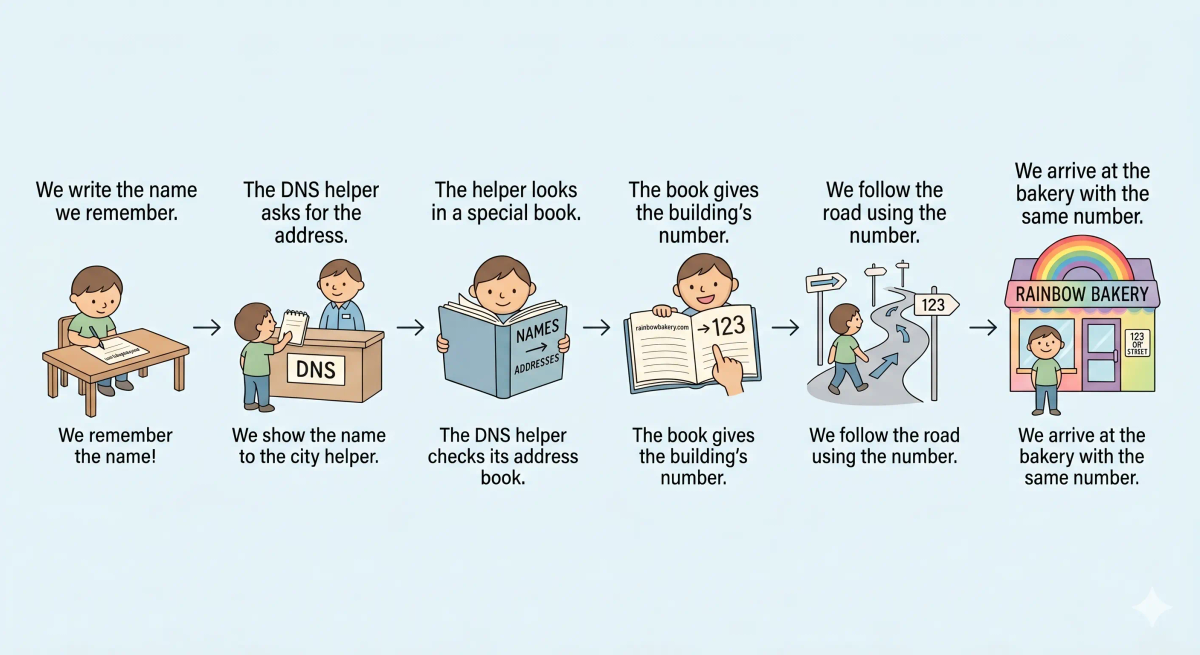
When you type something like youtube.com into your browser, you are not typing the website’s numeric address.
At that moment, the domain name gives you a simple name to remember and use.
If everything matches the expected behavior, the system finds the real address behind that name and the site loads.
If not, the browser may fail to reach the correct place because the name could not be matched properly.
What It Is Not
A domain name is not the same as…
- IP address — the IP address is the numeric location, while the domain name is the human-friendly label
- URL — a URL is the full web address, while the domain name is only one part of it
- DNS — DNS is the system that matches the name to the address
- A webpage itself — the webpage is the content you visit, while the domain name is the name used to find it
So while these ideas are related, a domain name specifically does human-friendly website naming.
Why It Matters
- It makes websites easier for humans to remember
- It helps people type and share website names
- It works with DNS to connect human naming to machine addresses
- It is one of the reasons the web feels usable instead of numeric and confusing
This matters because a domain name turns a machine-oriented address system into something people can actually use comfortably.
The next time you type a website name, remember that you are using the human-friendly label, not the hidden number behind it.
A Slightly Deeper Version
A slightly deeper way to think about a domain name is that it is a human-readable identifier used in the Domain Name System.
It points people and software toward the correct site by allowing DNS to map that name to the underlying IP address. That is why domain names are so central to how the web feels easy to navigate.
Common Questions
What is a domain name in simple words?
A domain name is the human-friendly name people type to visit a website. In simple words, it is like the shop name on a building in a giant city.
How does a domain name work?
A domain name works with DNS to point people to the right server. When you type a domain name, DNS helps find the matching IP address so your browser can reach the correct destination.
Is a domain name the same as a URL?
No. A domain name is only one part of a full URL. A URL can also include the protocol, path, page name, query details, and other instructions.
Is a domain name the same as an IP address?
No. A domain name is the human-friendly label, while an IP address is the numeric network address computers use to route data.
Is a domain name the same as a website?
No. A domain name is the address name people use to reach a website. The website is the actual pages, files, content, or app that visitors see.
Can two websites have the same domain name?
Not in the same exact way at the same time. A registered domain name usually points to one main owner or destination, though it can have subdomains and different pages under it.
Do I need DNS if I already have a domain name?
Yes. A domain name is the name people remember, but DNS is the system that helps translate that name into the correct IP address.
What is a domain extension?
A domain extension is the ending of a domain name, such as .com, .org, .net, or .io. It is also called a top-level domain, or TLD.
In Short
- A domain name is like the shop name on a building in a city
- Its job is to give people a simple way to remember and use website names
- It works with DNS to point to the real numeric address
- It is different from an IP address, a URL, and DNS itself
- It matters because it makes the web much easier for humans to use