 What Is a Port Number? Explained Simply for Beginners
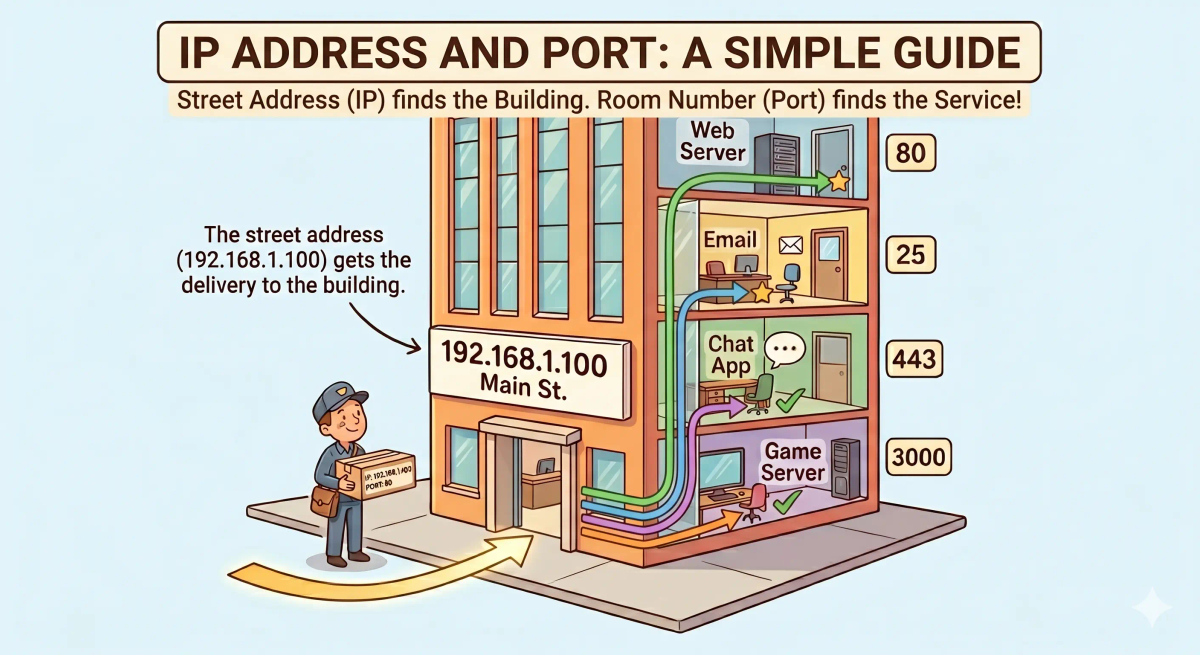
 Imagine a tall office building in a big city. The building has one street address, but inside it has many different rooms. One room is for customer support. Another room is for mail. Another is for video meetings. Another is for deliveries.
If every visitor only knew the building address but not the room number, they would all pile into the lobby and nobody would know where to go next.
So how does a message reach not just the right building, but the right place inside the building? That is exactly where a port number comes in.
A port number is a number that helps data reach the correct service or application on a device.
Main Analogy
Think of a port number like a room number inside an office building
- Building address = IP address
- Building = device or computer
- Rooms inside the building = apps or services
- Room number = port number
So the easiest way to understand a port number is to think of it as the number that helps a message reach the right place inside a device.
What Problem Does It Solve?
If there were no room numbers, then every visitor would reach the building but still not know which room to enter. In the real world, that means data could reach the right device but still not know which app or service should receive it. So the job of a port number is to help data find the right destination inside a device.
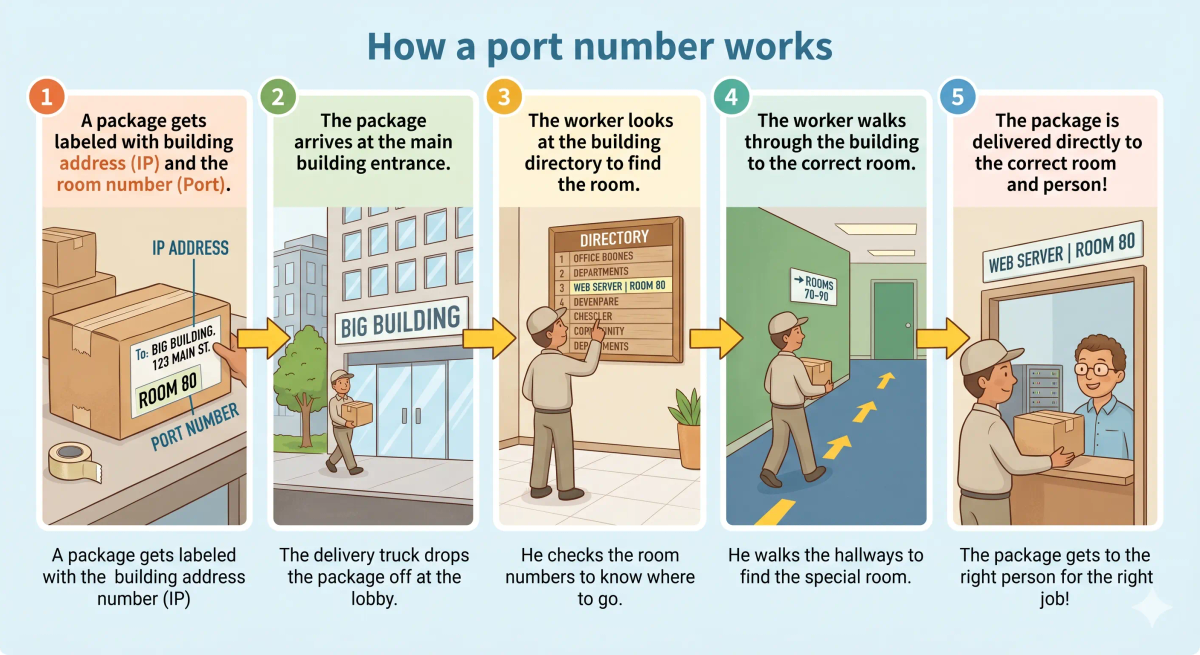
How It Works in the Story
- A package arrives at the office building
- The delivery worker checks the room number on the package
- The worker goes to the correct floor or room
- The package is handed to the right office
- The correct office opens and uses the package
How It Works in the Real World
- Data reaches a device using its IP address
- The port number tells the device which service or app should get that data
- The operating system passes the data to the correct process
- The right app or service handles the request
👉 That means a port number helps different services on one device stay organized.
Real-World Example
Example: Opening a website
When you open a website, your device sends a request toward a server. That request uses the server’s address to find the correct computer. At that moment, the port number helps the request reach the right service on that server, such as the web service. If everything matches correctly, the server responds and the page loads. If not, the service may not respond at all.
What It Is Not
A port number is not the same as…
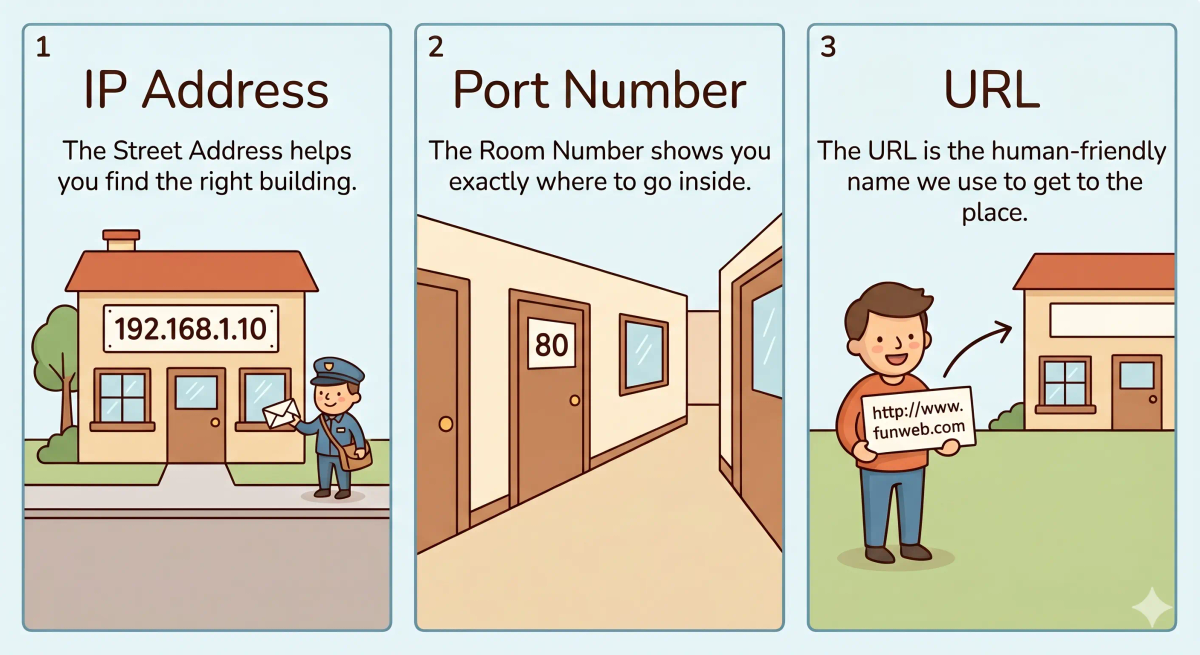
- IP address — an IP address identifies the device itself
- URL — a URL is the human-friendly web address you type
- Protocol — a protocol is the set of rules for communication
- Socket — a socket is a fuller communication endpoint that uses IP address and port information together
So while these ideas are related, a port number specifically does the job of pointing to the right service inside a device.
Why It Matters
- It lets one device run many services at the same time
- It helps incoming data reach the right application
- It keeps network communication organized
- It makes modern internet services possible on shared systems
This matters because a port number helps one computer handle many kinds of communication without mixing them up. Remember: the next time a website loads or an app connects, a port number may be quietly helping the data reach the right place inside the machine.
A Slightly Deeper Version
A slightly deeper way to think about a port number is that it is part of the transport-layer addressing used by protocols such as TCP and UDP. It helps the operating system identify which process or service should receive incoming network data.
Common Questions
What is a port number in simple words?
A port number is a number that helps data reach the right service or app on a device. In simple words, it is like a room number inside an office building.
What is a port number used for?
A port number is used to separate different network services on the same device. For example, web traffic, email, games, and file transfers can each use different ports.
Is a port number the same as an IP address?
No. An IP address identifies the device or server, while a port number identifies the specific service or app on that device.
What is the difference between an IP address and a Port Number?
An IP address is like the building address, and a port number is like the room number inside that building. You usually need both to reach the right service.
What are common port numbers?
Common port numbers include 80 for HTTP, 443 for HTTPS, 22 for SSH, 25 for SMTP, 53 for DNS, and 21 for FTP.
Do users always see port numbers?
No. Many common services use default port numbers in the background, so users usually do not need to type or notice them.
Can two apps use the same port number?
Usually not on the same IP address and protocol at the same time. The system needs a clear destination, so only one service can listen on that exact combination.
Is a port number the same as a socket?
No. A port number is one part of a socket. A socket usually includes the IP address, port number, and protocol together.
In Short
- A port number is like a room number inside a building
- Its job is to direct data to the right service inside a device
- It helps one machine run many kinds of services
- It is different from an IP address or URL
- It matters because it keeps communication organized inside devices