 What Is a Modem? Explained Simply for Beginners
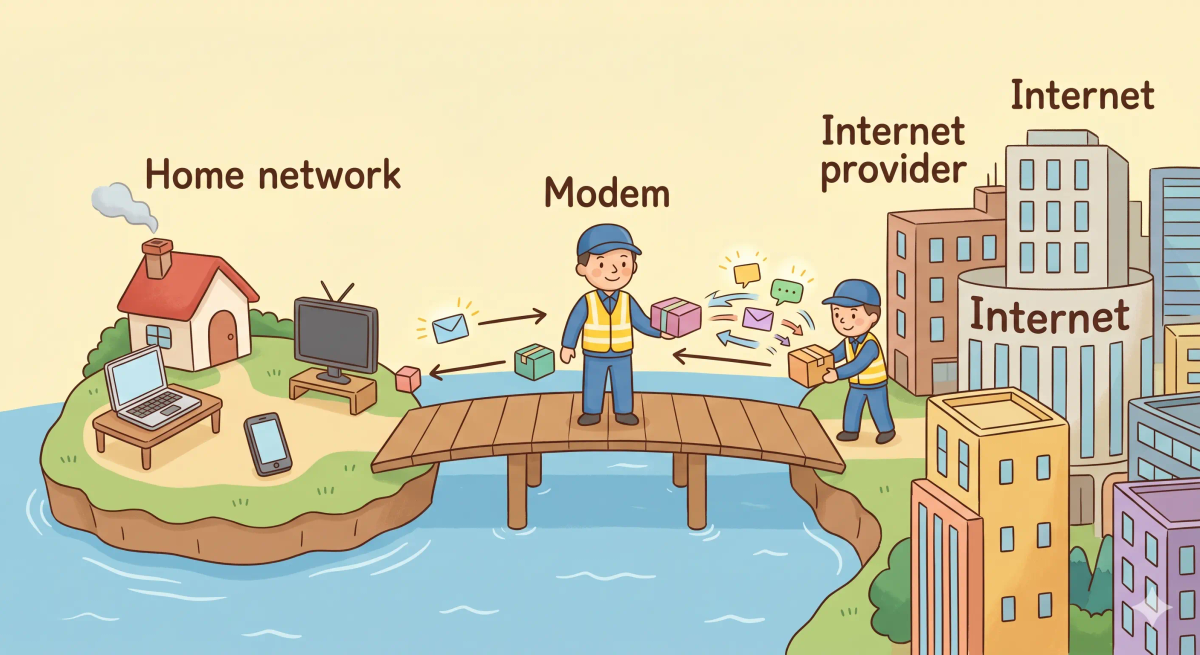
 Imagine your house is on a small island. Your family wants to send letters, receive packages, and talk to people in the big city far away. But there is one problem: your island and the city do not speak in exactly the same way.
You need a special dock worker at the bridge who can take things from your island side, prepare them properly, and send them across to the city side. And when things come back from the city, that same helper prepares them so your island can understand them again.
That helper is the easiest way to understand a modem.
A modem is a device that connects your home or local network to your internet service provider by converting signals so they can travel correctly.
Main Analogy
Think of a modem like a bridge translator between your island and the mainland city
- Your home network = the island village
- The internet provider = the mainland city
- Signals traveling across the bridge = internet data signals
- Bridge translator = modem
So the easiest way to understand a modem is to think of it as the helper that makes communication possible between your home and the outside internet world.
What Problem Does It Solve?
If there were no bridge translator, the island and the city would struggle to exchange messages properly. In the real world, that means your home network would not be able to communicate correctly with your internet provider’s network. So the job of a modem is to make the connection between your home and your internet provider possible.
How It Works in the Story
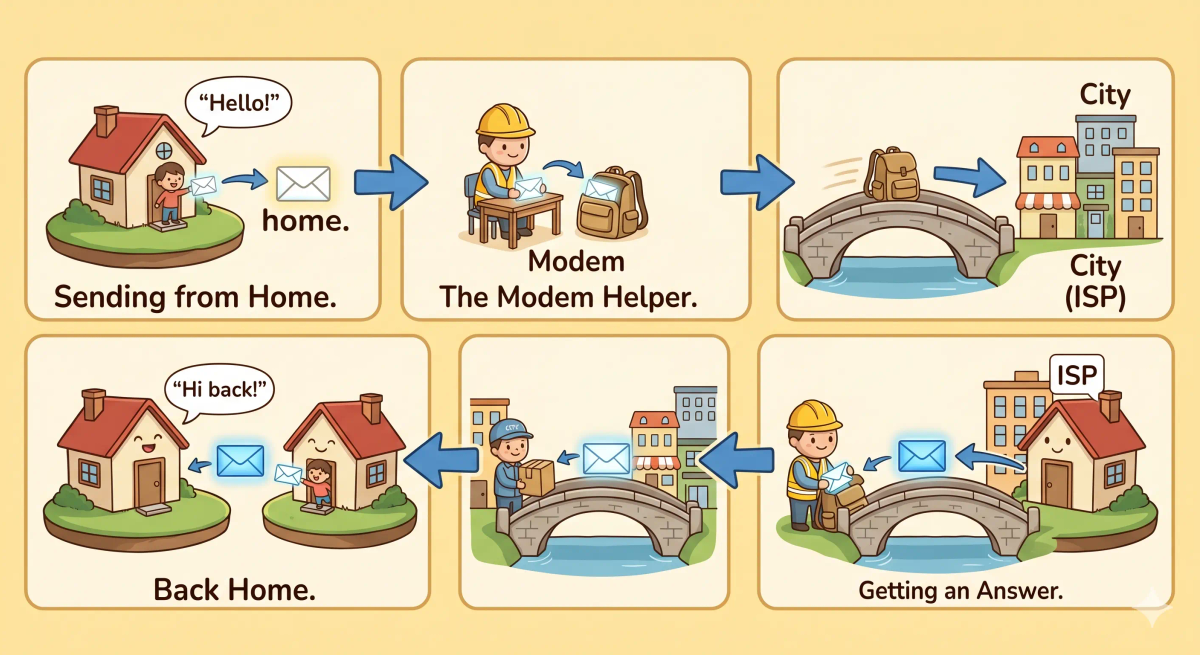
- A message starts on the island
- The bridge helper prepares it for travel to the city
- The message crosses the bridge
- A reply comes back from the city
- The bridge helper prepares it again for the island to use
How It Works in the Real World
- Your home network sends digital data toward the modem
- The modem converts the signal into a form that can travel over the provider’s line
- Data comes back from the provider toward your modem
- The modem converts it back so your home network can use it
👉 That means a modem helps your home network talk to your internet provider.
Real-World Example
Example: Opening a website at home
When you open a website, your phone or laptop creates a request. At that moment, the modem helps move that request out from your home network toward your internet provider. When the website data comes back, the modem helps convert it into a form your home network can use. If everything works properly, the page loads on your screen. If not, your home may not connect to the internet at all.
What It Is Not
A modem is not the same as…
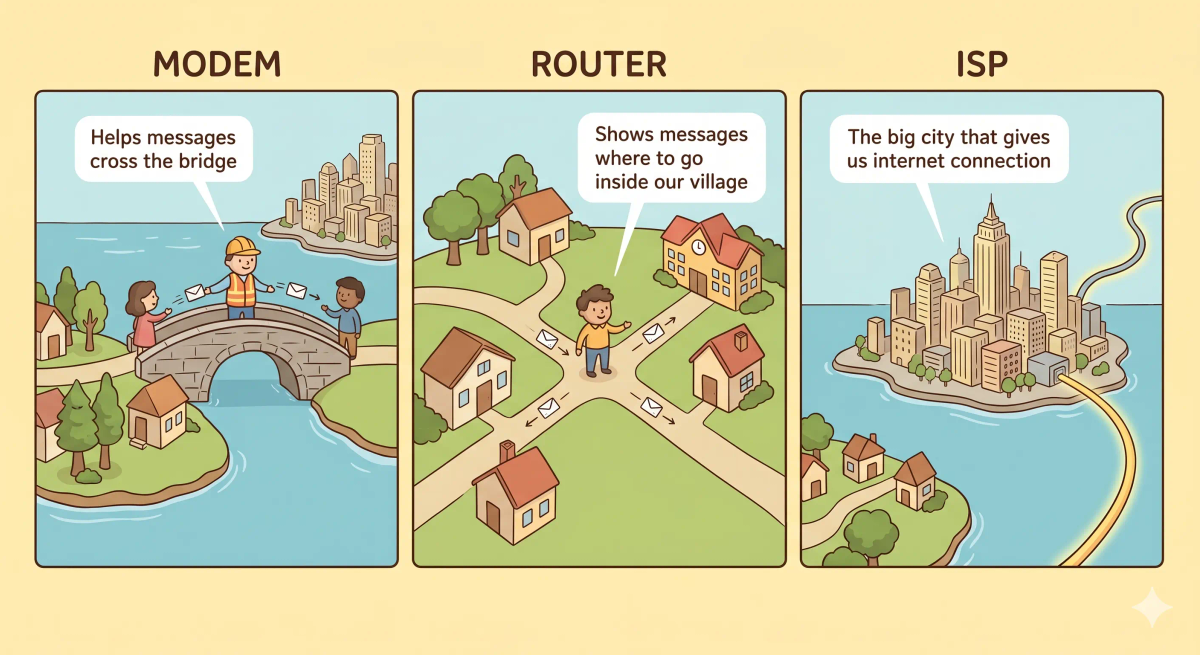
- Router — a router directs data to the right device or path
- Wi-Fi — Wi-Fi is a wireless method for devices to connect locally
- ISP — the ISP is the company that provides your internet service
- Firewall — a firewall filters traffic for safety
So while these ideas are related, a modem specifically does the job of connecting your network to your provider by converting signals.
Why It Matters
- It allows your home to connect to the internet provider
- It helps signals travel in a usable form
- It is one of the first key devices in many home internet setups
- Without it, your router and devices may not reach the internet at all
This matters because a modem is one of the quiet boundary devices that makes internet access possible in the first place. Remember: the next time your home goes online, the modem is one of the first helpers making that bridge to the wider internet.
A Slightly Deeper Version
A slightly deeper way to think about a modem is that it modulates and demodulates signals between your local network equipment and the transmission system used by your provider. It takes one form of signal, converts it for transport, and then converts incoming signals back again.
Common Questions
What is a modem in simple words?
A modem is the device that connects your home network to your internet service provider. In simple words, it is like a bridge translator between your home and the larger internet network.
How does a modem work?
A modem works by translating signals from your internet provider into a form your home network can use. It also sends data from your home back to the provider.
Does a modem give me Wi-Fi?
Not by itself. A modem’s main job is to connect to your internet provider. Wi-Fi usually comes from a router, though many home devices combine modem and router functions in one box.
Is a modem the same as a router?
No. A modem connects your home to your internet service provider, while a router directs traffic between your devices and helps them share that connection.
What is the difference between a modem and a router?
A modem is the bridge to your internet provider. A router is the traffic director for your home devices. Many homes use both, either as two separate devices or one combined modem-router unit.
Do I need a modem at home?
In many home internet setups, yes. You usually need a modem or a provider-supplied gateway device to connect your home to the internet service.
Can a modem make my internet faster?
A modem can affect the speeds your connection can support, especially if it is old or not compatible with your plan. But it cannot create more speed than your internet plan and provider network allow.
When should I replace my modem?
You may need to replace your modem if it is too old for your internet plan, keeps disconnecting, does not support newer standards, overheats often, or your provider says it is no longer compatible.
In Short
- A modem is like a bridge translator
- Its job is to connect your home network to your provider
- It helps signals travel in the right form
- It is different from a router or Wi-Fi
- It matters because it helps your internet connection happen at all